How to develop healthier perspectives

Whether it’s to reduce worry levels or to lead a happier life, our cognitions should work for us and not against us. But mere decision to forcefully change our thoughts won’t make us feel better instantly. It is our cognitive distortions that we need to identify before we can decide on any meaningful action towards happiness.

We all have cognitive faults in our thinking that are not supporting our happiness. Cognitive Behavioural Therapy (CBT) teaches us that in order to feel better, we need to think better.
The first step towards total control is to catch our automated thoughts and identify any distortions in the process. Whether it’s black & white thinking, filtering, generalising, labelling or catastrophising; the main thing is to be completely aware of their existence.

Once you have captured your dominant cognitive distortions, then you can start the disputing process which is simply an exercise of a few questions to take your mind back to the present moment and find a more realistic view of your current situation.

How can you do that? Please see below an action plan that would be beneficial in this process:

1) Acknowledge the existence of unrealistic thoughts in your mind

We have millions of thoughts popping into our head every day and we tend to accept all of them as valid. This means that even the negative and unrealistic thoughts are regarded as true in our minds. We need to be aware that not our thoughts are worth accepting as some of them may not serve us but are actually causing damage in our emotional world. Identifying the thoughts that are making us upset are the ones that we need to pay close attention to.

2) Find evidences against your unrealistic thoughts

Once the thoughts that are on the unrealistic edge of our thinking are identified, we can then start to work with the different type of distortions. Whether it’s about positive or negative generalisations, we need to remind ourselves that we mostly live in the grey area as not everything is black or white in our lives. And while most of us can imagine the worst case scenarios in several different happenings, the worst rarely happens and most of our worries would not manifest in the real world at all. Acknowledging these facts is the first step towards a happier life as these truths help us bringing back our thoughts to a more realistic state. Once you have identified your cognitive distortions you can be in the position to take action and to dispute the thoughts that are popping into your mind. This involves the process of challenging yourself with several questions to ascertain whether your thinking has reached an unrealistic dimension. Asking ‘Can I see that there can be more than two outcomes of this situation?’ is a useful example question to challenge black and white thinking as it identifies the limitations this distortion is imposing in our minds and helps to realise that life is not revolving around the two extremes only. It is also important to assess how the unrealistic thoughts making you feel – identifying the impact these thoughts have on your emptional wellbeing is paramount to be aware of faulty our cognition is.

3) Do a honest risk assessment of your thoughts

In business, the base of risk assessment is to judge the likelihood of the risk and its impact in order to evaluate how it affects the holistic view. As part of this, you need to bring your unrealistic thought into a realistic state (as outlined above in point 2) and then independently assess how these thoughts scale in the impact/likelihood scale. How likely that the worry will materialise? How much impact would it have on you? This is a prerequisite to proceed with the next essential step.

4) Manage the identified risks

During this phase, you have a couple of options, the first is to identify what can go wrong (what is the worst scenario) and to determine whether this risk is worth dealing with. If the answer is yes, then the next step is to create mitigating plans to deal with the materialised risks and create contingency plans to deal with the possible risks should they become real events. These actions would ensure that you would be fully prepared for any potential threats and so your life is not affected harshly by any of these risks. In terms of catastrophising, you can identify people who can help you if the worst happens which is another way of comforting your mind that you are not alone in the world.

5) Assess how you feel after this exercise

Put your mind back to the original worry – how do you feel now? How would you evaluate the feeling you had before the exercise? Can you now see a more realistic perspective of the situation? Do you feel more at ease and comfortable?

This exercise makes sure you can put your unrealistic thoughts into a different light and so you can feel better after the holistic evaluation
Gratitude

As they say, our personality is formed in the early years of our development. Further life experiences – especially the meaningful ones – can also make a powerful impact on our main characteristics. If I was to mention a remarkable period of my personal development, I would confidently come up with my relocation to the United Kingdom in April 2012.

The young girl who was travelling on the plane to London on that spring afternoon back in 2012 was although full of determination, but little did she know how challenging this journey will be in a new environment where all she had was her intelligence to solve problems.

Meeting E. during this major milestone of my life was a blessing. I did not have any connections in England so he was my sturdy tree with deep roots whom I can always rely on. Not a lot of English people would give a chance to a complete – and unemployed – foreigner to rent his property because of fear of not being able to pay the rent, but he did. In all honesty, few expected I would make a success of relocating to the UK (not even me), but E. was trying to give me faith at all times with his positive personality that it will happen if I persevere. And he was right. It took a while but it finally happened and managed to transition from retail to banking.

When I developed my mental illness, I thought this will be the end of my career in this country especially after the second debilitating episode but I managed to stabilise on the meds and bounce back from it. I will never forget when E. took a day off from work to take me to Tooting hospital when I was at rock bottom. It was the worst and most vulnerable times of my life. As a person who doesnt have any roots here, he was my main support who was always standing tall and can rely on him under any circumstances.

We are ultimately very different people but I believe we both learnt a lot from each other. He was a sales manager by profession and I always admired his confidence of handling people and listening to his constant arguments with Virgin Media about their appalling service gave me important lessons on how to stand up for myself in a world where a lot of people would push you down just so they can lift themselves up. E. has also witnessed my challenges in my career due to office politics and gave valuable advice on ‘playing the game’ myself to navigate in the harsh world of the corporate settings. But I guess the biggest lesson I learnt next to him is that perfection doesn’t exist and so people don’t need to be perfect to be loved by us which was taking me a long time to realise being a perfectionist soul.

Knowing how strong, stubborn and self reliant his personality is, I was very surprised to see that a quiet introvert like me can have an impact on a rowdy extroverted person like him in terms of a lot of aspects of life. He slowly learnt from me to be more sensible with money and someone who was always after the fine, luxurious things in life, he eventually learnt next to me that sometimes the simplest things mean the most. And I suspect as a salesman who learnt to not portray any sensitivity in his professional and personal dealings he also realised during the time of his dad passing away that vulnerability is not a weakness in front of your loved ones but something that genuinely makes you human.

I don’t think E. knows how proud I am for the self-employed career he built up. I remember I have tested his website previously and I enjoyed it very much knowing I am helping him in the process. I have seen a few posts on Linkedin about this company activity and some very nice reviews on Google and I am sure he is doing very well now but would love to know how he is doing.

I feel guilt almost every day that someone who has contributed to my development so much and was there for me all the time through thick and thin is no longer part of my life in any form. Although we were opposite personalities, one thing was always common: we were both liberal and we managed to have wonderful conversations about life which I deeply miss: it feels unnatural that we don’t talk anymore after what we have gone through together in the last decade.

Guess in the unlikely event of him reading this post, I hope he will realise how much positive effect he had on an immigrant who wouldn’t have been able to achieve as much if he had not been by my side…

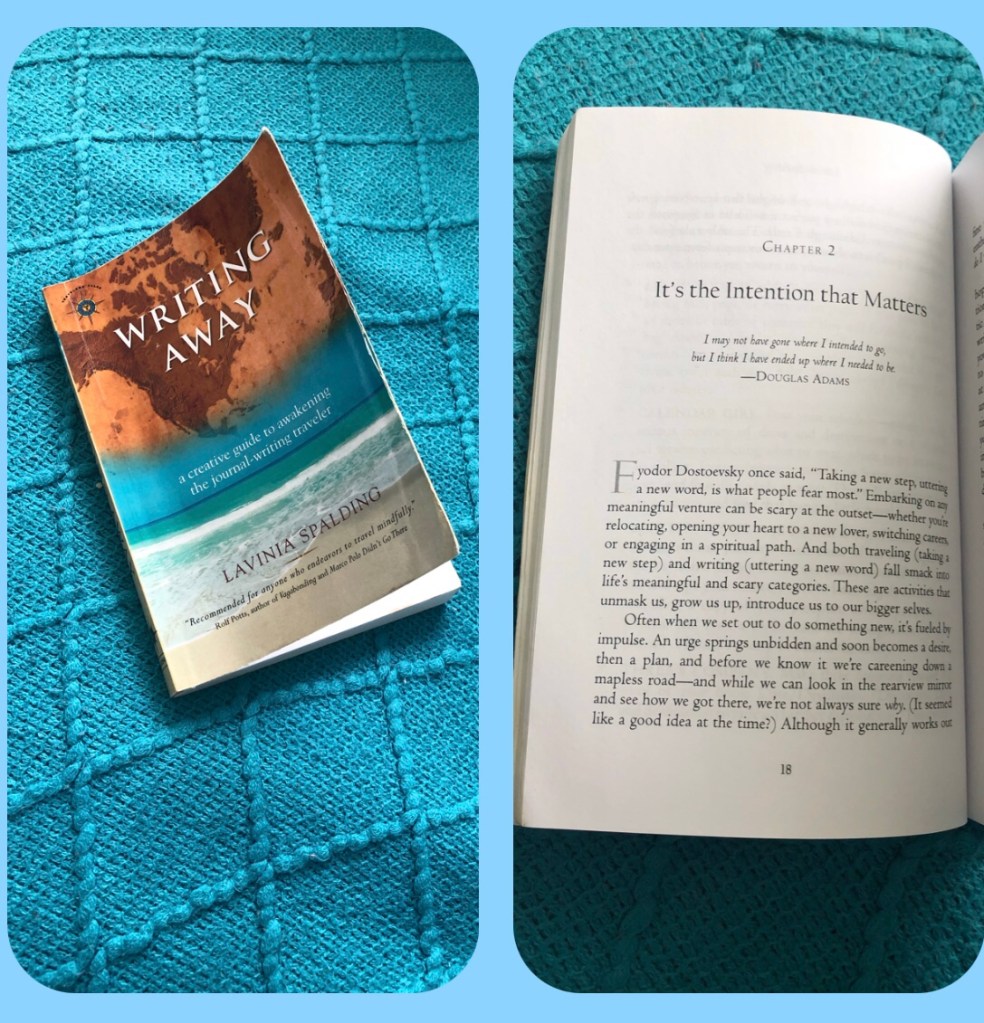
Book review – Writing Away from Lavinia Spalding

“When travel is viewed through a lens of personal development, it becomes more than a getaway and more of a gateway; we travel not just to change location, but also our perspective. Yet it’s only when combined with active observation and self-examination that a voyage truly change us.” Back cover

This review was originally written for my previous blog, but as this book is a serious dose of inspiration for me and made a remarkable impact on my writing, it is worth including on Outside the bud too.

Writing Away should be every travellers’ bible: both on their shelves and in their backpacks. This profound piece of art is not just about how to chronicle our travel experiences but also about the way we behave, feel and perceive the things that are happening to us outside of our comfort zones as unfamiliarity is something that can truly change us and the way we look at the world. Its aim is to show how to observe the new environment – and our role in it – and preserve the meaningful aspects with a more conscious approach. Having said that, this book has psychological and anthropological meanings: we can learn how to slow our cognitive process down in the moment and learn to preserve the newly gained insights in a way which would not only help to re-experience the written world again but also to provide a profound story for our future generation. The author recommends having a blank journal in order to not feel limited between the lines: it helps you to spice your story up with pictures, drawings in order to truly preserve a memory. Creating your own creative world without being restricted is the core thing in travel journaling as “an absence of lines leaves room for imagination to take over” according to the author.

I am not a highly experienced traveller like Lavinia Spalding, but since I live in London, I have first-hand experience about the forming effect of leaving our familiar environment as mentioned in my previous post. Wherever we travel, wherever we relocate, there are certain inner obstacles we are carrying with ourselves to everywhere and these will stay with us until we solve them regardless of where we are. This is a great raw material for our creative process as analysing our innermost experiences is a vital ingredient for our personal growth.

The end of Chapter 3 focuses on writers’ block and provide some ideas on how to move on from this limiting period. This topic is something that I have a different opinion about as I don’t believe in writers’ block. Chances are that infertile days, weeks or months occur without chronicling anything meaningful, however, it does not mean that there aren’t any ongoing war in the wild woods of a writer’s soul. So my core theory that a writer’s mind is never empty, it is always observing and analysing something, it is unstoppable. And the silent periods are indeed and inseparable part of any creative process where the purpose of time is to ripen any meaningful realizations into something innovative.

Overall, this is a great book to inspire journaling of our travel experiences. Writing Away functions as a profound life-discovering journey and it is highly recommended for every traveller for an exciting journey throughout the world and into ourselves.

“Connecting the dots looking backwards”

In the spring of 2012, a young woman in her twenties was sitting on a plane the first time in her life travelling abroad. Most people would have been very nervous in her shoes considering that she has never flown before, but in fact, her mind was fully occupied by the excitement of discovering the world’s rich existence through experiencing a brand new culture. Artistic self expression was her main talent and this long awaited adventure was really needed to stimulate her creative side. Whether it’s to express the interesting aspects of a new environment, the culture shock and it’s invisible obstacles or the joyful bacchanal her soul would be dancing when the new impressions are overflowing her senses. These moments, are literally the best raw materials for any creative process and she was aware that these will enrich her life further and provide her a brand new perspective on the world.

A big, orange-coloured suitcase, a medium sized handbag, £2,500 in cash and an incredible amount of determination to succeed was travelling with her on that April afternoon. It wasn’t a short holiday but a well planned life changing decision to leave the well known behind for the hope of a better quality of life. She knew that whatever happens in the future, she will cope and will always have a backup plan to return to her native country if things are not planning out well – and this safety net was sufficient for her over-analysing mind to not get into the worry cycle. Measuring herself in an environment where all she had was her intelligence to solve problems, was the highest form of personal development for her and this knowledge made it worthwhile to make the decision to leave the familiar behind. Being a risk averse soul, this was a very courageous decision. But the existence of a back up plan made the journey lighter which took away most of the fear that usually accompanies any major life-changing situation.

Living in another country she quickly realised that while we pick up new habits and create new boundaries, some aspects of our lives remain the same: our inner barriers, the never learnt lessons, the seemingly insurmountable obstacles we are carrying with ourselves to everywhere. Chances are these challenges will not break the surface immediately in a brand new environment, but once the newly experienced world becomes our new comfort zone, we will soon face everything that we have not solved in the past.

As Steve Jobs said, ‘you can’t connect the dots looking forward, you can only connect them looking backwards’- and while we can label life experiences as ‘bad’ in the moment when something outrageous is happening to us, looking backwards it can be evaluated as a blessing in disguise. As unbearable as it may seem to deal with a not-so-easy life situation, it can have a profound meaning if we are flexible enough to analyse the scenario and take away the most important lessons from it.

That young woman on the plane back in 2012 was me. If I follow Steve Jobs’ advice and connect the dots looking backwards, I can confidently say that this adventure was the best decision of my life despite all the challenges I experienced in my path. Met a lot of wonderful people who genuinely fostered my growth in one way or another and will forever be grateful for all the things I have learnt in the United Kingdom (including the difficult lessons). I am also grateful for all the closed doors that never opened to me during my time here as these events have diverted me to a more suitable and enjoyable path in both my private and professional life. Looking forward for all the new experiences this country can offer in the next decades!