Exposure therapy

Life is rarely happening on the black and white board, most things are in the grey spectrum – this is one the most important thoughts of Cognitive Behavioural Therapy (CBT) that I had the privilege to practice through the NHS a few years ago. Since then, I became very passionate about the subject and devised a ‘Thought disputing sheet’ that I have put onto my Vision Board to remind myself that it is very important to challenge my thoughts on a daily basis to reach a realistic state.

CBT has a very important practice to challenge fears, called Exposure Therapy. This involves exposing ourselves to our fears but in a gradual and structured manner. The process starts with establishing the main goal to be achieved and then breaking it down into small steps which are subsequently ordered by anxiety level. The activities that are the least anxiety-provoking are started until the anxiety goes away or reduced to a manageable level and then a more complex activity is pursued until the overarching goal is finally achieved. This greatly expands the comfort zone and is recommended to everyone as a self-development goal regardless of what state an individual is at as everyone has some form of fears and fobias that are holding back our progress in certain areas of our lives.

Knowing that I would like to progress further in my career, I have set a few goals in this area for the upcoming months and I will closely observe myself and collect the lessons learnt so that I can use it moving forwards for any new future endeavours.

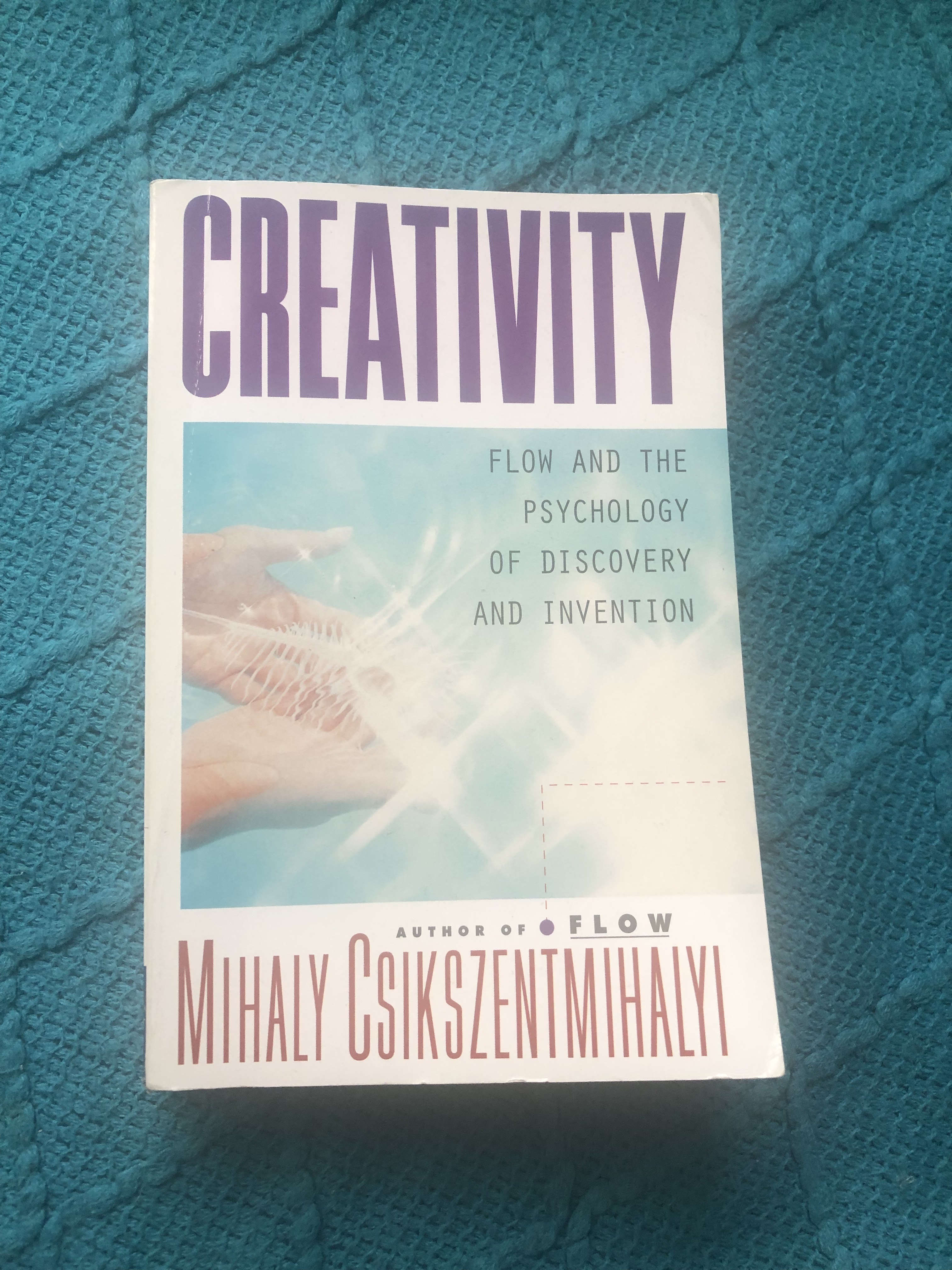
Book review – Creativity from Mihaly Csikszentmihalyi

This review was originally written for my Hungarian blog back in 2010, but as this book is a serious dose of inspiration for me and made a remarkable impact on my writing, it is worth including on Outside the bud too.

According to Mihály Csíkszentmihályi, the famous professor of Hungarian origin known for his work of Flow, the first and essential condition for creativity is to delve into the given domain: to learn all its aspects and rules, then put aside what you have learnt and try to surpass the classics. Because only the ones who have a thorough knowledge of a particular domain can create a new aspect of it with mashing up disparate notions to form an innovative theory.

Creativity covers several decades of research – interviews with scientists, artists, and company directors provided the most significant raw material for the development of the theory, in which historical, philosophical, psychological and anthropological aspects are present throughout. In addition to the definition, conceptual and conditional system of creativity, sectoral aesthetics, reflections and gems of everyday creativity also shine in the volume.

It is important to note that there is an example in the book in which the writer presents the importance of the domain experts’ attitudes to any new artwork with the help of a specific painter’s career path. The story clearly shows the important realization that the true value of a creative artwork always depends on the mental maturity and receptiveness of the particular domain’s circle of experts. Therefore not all remarkable inventions become widely successful at a given time – the artist needs to be in the right place at the right time and practice self-promotion to be known in the right expert circles of their domain.

I would recommend this book for any artists (novice and professional alike) who needs extra motivation and encouragement to push themselves further in their creative process to expand the boundaries of a particular domain. And for all the casual readers, this interesting writing will guide you in how to activate your inner creative side in everyday life activities.

Gratitude

As they say, our personality is formed in the early years of our development. Further life experiences – especially the meaningful ones – can also make a powerful impact on our main characteristics. If I was to mention a remarkable period of my personal development, I would confidently come up with my relocation to the United Kingdom in April 2012.

The young girl who was travelling on the plane to London on that spring afternoon back in 2012 was although full of determination, but little did she know how challenging this journey will be in a new environment where all she had was her intelligence to solve problems.

Meeting E. during this major milestone of my life was a blessing. I did not have any connections in England so he was my sturdy tree with deep roots whom I can always rely on. Not a lot of English people would give a chance to a complete – and unemployed – foreigner to rent his property because of fear of not being able to pay the rent, but he did. In all honesty, few expected I would make a success of relocating to the UK (not even me), but E. was trying to give me faith at all times with his positive personality that it will happen if I persevere. And he was right. It took a while but it finally happened and managed to transition from retail to banking.

When I developed my mental illness, I thought this will be the end of my career in this country especially after the second debilitating episode but I managed to stabilise on the meds and bounce back from it. I will never forget when E. took a day off from work to take me to Tooting hospital when I was at rock bottom. It was the worst and most vulnerable times of my life. As a person who doesnt have any roots here, he was my main support who was always standing tall and can rely on him under any circumstances.

We are ultimately very different people but I believe we both learnt a lot from each other. He was a sales manager by profession and I always admired his confidence of handling people and listening to his constant arguments with Virgin Media about their appalling service gave me important lessons on how to stand up for myself in a world where a lot of people would push you down just so they can lift themselves up. E. has also witnessed my challenges in my career due to office politics and gave valuable advice on ‘playing the game’ myself to navigate in the harsh world of the corporate settings. But I guess the biggest lesson I learnt next to him is that perfection doesn’t exist and so people don’t need to be perfect to be loved by us which was taking me a long time to realise being a perfectionist soul.

Knowing how strong, stubborn and self reliant his personality is, I was very surprised to see that a quiet introvert like me can have an impact on a rowdy extroverted person like him in terms of a lot of aspects of life. He slowly learnt from me to be more sensible with money and someone who was always after the fine, luxurious things in life, he eventually learnt next to me that sometimes the simplest things mean the most. And I suspect as a salesman who learnt to not portray any sensitivity in his professional and personal dealings he also realised during the time of his dad passing away that vulnerability is not a weakness in front of your loved ones but something that genuinely makes you human.

I don’t think E. knows how proud I am for the self-employed career he built up. I remember I have tested his website previously and I enjoyed it very much knowing I am helping him in the process. I have seen a few posts on Linkedin about this company activity and some very nice reviews on Google and I am sure he is doing very well now but would love to know how he is doing.

I feel guilt almost every day that someone who has contributed to my development so much and was there for me all the time through thick and thin is no longer part of my life in any form. Although we were opposite personalities, one thing was always common: we were both liberal and we managed to have wonderful conversations about life which I deeply miss: it feels unnatural that we don’t talk anymore after what we have gone through together in the last decade.

Guess in the unlikely event of him reading this post, I hope he will realise how much positive effect he had on an immigrant who wouldn’t have been able to achieve as much if he had not been by my side…

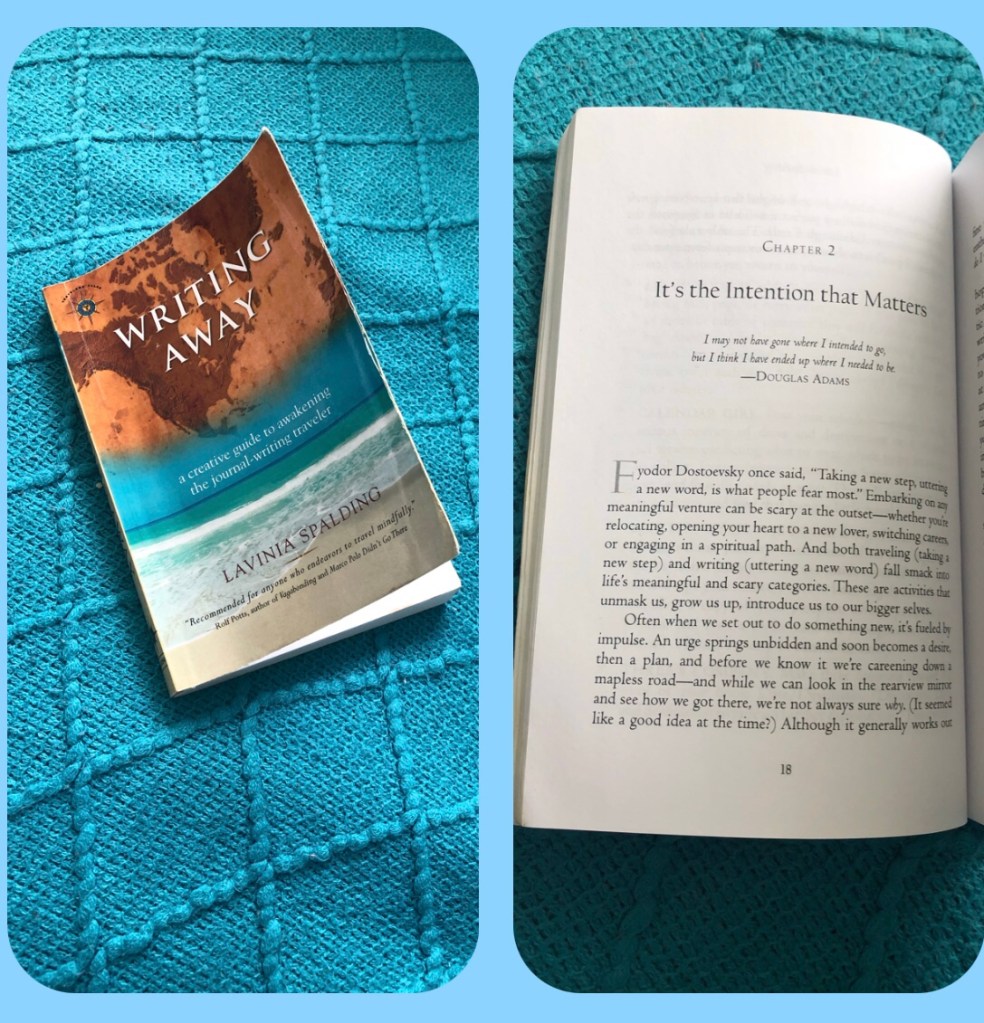
Book review – Writing Away from Lavinia Spalding

“When travel is viewed through a lens of personal development, it becomes more than a getaway and more of a gateway; we travel not just to change location, but also our perspective. Yet it’s only when combined with active observation and self-examination that a voyage truly change us.” Back cover

This review was originally written for my previous blog, but as this book is a serious dose of inspiration for me and made a remarkable impact on my writing, it is worth including on Outside the bud too.

Writing Away should be every travellers’ bible: both on their shelves and in their backpacks. This profound piece of art is not just about how to chronicle our travel experiences but also about the way we behave, feel and perceive the things that are happening to us outside of our comfort zones as unfamiliarity is something that can truly change us and the way we look at the world. Its aim is to show how to observe the new environment – and our role in it – and preserve the meaningful aspects with a more conscious approach. Having said that, this book has psychological and anthropological meanings: we can learn how to slow our cognitive process down in the moment and learn to preserve the newly gained insights in a way which would not only help to re-experience the written world again but also to provide a profound story for our future generation. The author recommends having a blank journal in order to not feel limited between the lines: it helps you to spice your story up with pictures, drawings in order to truly preserve a memory. Creating your own creative world without being restricted is the core thing in travel journaling as “an absence of lines leaves room for imagination to take over” according to the author.

I am not a highly experienced traveller like Lavinia Spalding, but since I live in London, I have first-hand experience about the forming effect of leaving our familiar environment as mentioned in my previous post. Wherever we travel, wherever we relocate, there are certain inner obstacles we are carrying with ourselves to everywhere and these will stay with us until we solve them regardless of where we are. This is a great raw material for our creative process as analysing our innermost experiences is a vital ingredient for our personal growth.

The end of Chapter 3 focuses on writers’ block and provide some ideas on how to move on from this limiting period. This topic is something that I have a different opinion about as I don’t believe in writers’ block. Chances are that infertile days, weeks or months occur without chronicling anything meaningful, however, it does not mean that there aren’t any ongoing war in the wild woods of a writer’s soul. So my core theory that a writer’s mind is never empty, it is always observing and analysing something, it is unstoppable. And the silent periods are indeed and inseparable part of any creative process where the purpose of time is to ripen any meaningful realizations into something innovative.

Overall, this is a great book to inspire journaling of our travel experiences. Writing Away functions as a profound life-discovering journey and it is highly recommended for every traveller for an exciting journey throughout the world and into ourselves.