Book review – Creativity from Mihaly Csikszentmihalyi

This review was originally written for my Hungarian blog back in 2010, but as this book is a serious dose of inspiration for me and made a remarkable impact on my writing, it is worth including on Outside the bud too.

According to Mihály Csíkszentmihályi, the famous professor of Hungarian origin known for his work of Flow, the first and essential condition for creativity is to delve into the given domain: to learn all its aspects and rules, then put aside what you have learnt and try to surpass the classics. Because only the ones who have a thorough knowledge of a particular domain can create a new aspect of it with mashing up disparate notions to form an innovative theory.
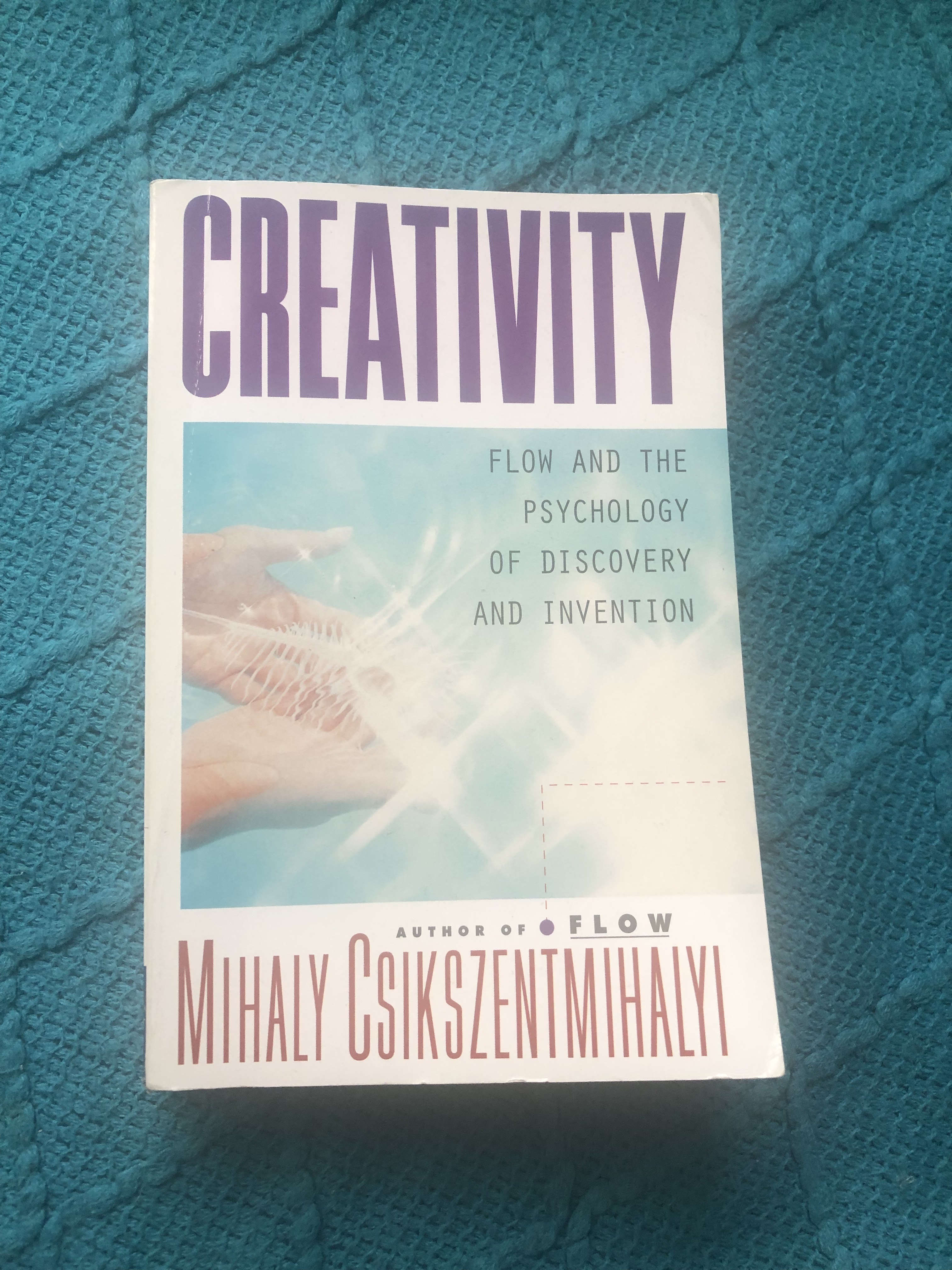
Creativity covers several decades of research – interviews with scientists, artists, and company directors provided the most significant raw material for the development of the theory, in which historical, philosophical, psychological and anthropological aspects are present throughout. In addition to the definition, conceptual and conditional system of creativity, sectoral aesthetics, reflections and gems of everyday creativity also shine in the volume.

It is important to note that there is an example in the book in which the writer presents the importance of the domain experts’ attitudes to any new artwork with the help of a specific painter’s career path. The story clearly shows the important realization that the true value of a creative artwork always depends on the mental maturity and receptiveness of the particular domain’s circle of experts. Therefore not all remarkable inventions become widely successful at a given time – the artist needs to be in the right place at the right time and practice self-promotion to be known in the right expert circles of their domain.

I would recommend this book for any artists (novice and professional alike) who needs extra motivation and encouragement to push themselves further in their creative process to expand the boundaries of a particular domain. And for all the casual readers, this interesting writing will guide you in how to activate your inner creative side in everyday life activities.
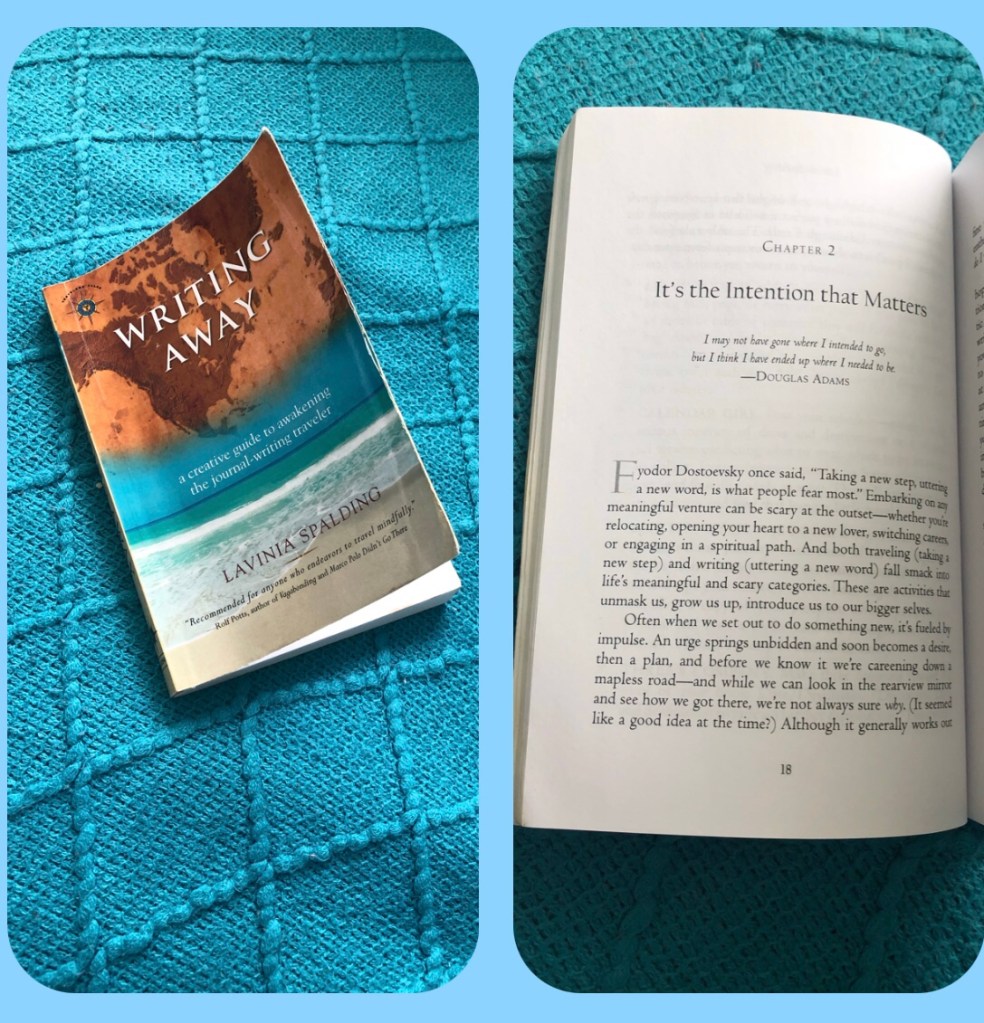
Book review – Writing Away from Lavinia Spalding

“When travel is viewed through a lens of personal development, it becomes more than a getaway and more of a gateway; we travel not just to change location, but also our perspective. Yet it’s only when combined with active observation and self-examination that a voyage truly change us.” Back cover

This review was originally written for my previous blog, but as this book is a serious dose of inspiration for me and made a remarkable impact on my writing, it is worth including on Outside the bud too.

Writing Away should be every travellers’ bible: both on their shelves and in their backpacks. This profound piece of art is not just about how to chronicle our travel experiences but also about the way we behave, feel and perceive the things that are happening to us outside of our comfort zones as unfamiliarity is something that can truly change us and the way we look at the world. Its aim is to show how to observe the new environment – and our role in it – and preserve the meaningful aspects with a more conscious approach. Having said that, this book has psychological and anthropological meanings: we can learn how to slow our cognitive process down in the moment and learn to preserve the newly gained insights in a way which would not only help to re-experience the written world again but also to provide a profound story for our future generation. The author recommends having a blank journal in order to not feel limited between the lines: it helps you to spice your story up with pictures, drawings in order to truly preserve a memory. Creating your own creative world without being restricted is the core thing in travel journaling as “an absence of lines leaves room for imagination to take over” according to the author.

I am not a highly experienced traveller like Lavinia Spalding, but since I live in London, I have first-hand experience about the forming effect of leaving our familiar environment as mentioned in my previous post. Wherever we travel, wherever we relocate, there are certain inner obstacles we are carrying with ourselves to everywhere and these will stay with us until we solve them regardless of where we are. This is a great raw material for our creative process as analysing our innermost experiences is a vital ingredient for our personal growth.

The end of Chapter 3 focuses on writers’ block and provide some ideas on how to move on from this limiting period. This topic is something that I have a different opinion about as I don’t believe in writers’ block. Chances are that infertile days, weeks or months occur without chronicling anything meaningful, however, it does not mean that there aren’t any ongoing war in the wild woods of a writer’s soul. So my core theory that a writer’s mind is never empty, it is always observing and analysing something, it is unstoppable. And the silent periods are indeed and inseparable part of any creative process where the purpose of time is to ripen any meaningful realizations into something innovative.

Overall, this is a great book to inspire journaling of our travel experiences. Writing Away functions as a profound life-discovering journey and it is highly recommended for every traveller for an exciting journey throughout the world and into ourselves.